You Got Your Prosthesis… Now What? What’s Normal, What’s Not, and When to Speak Up
What’s normal after receiving a prosthesis, what may signal a problem, and when to reach out to your prosthetist.
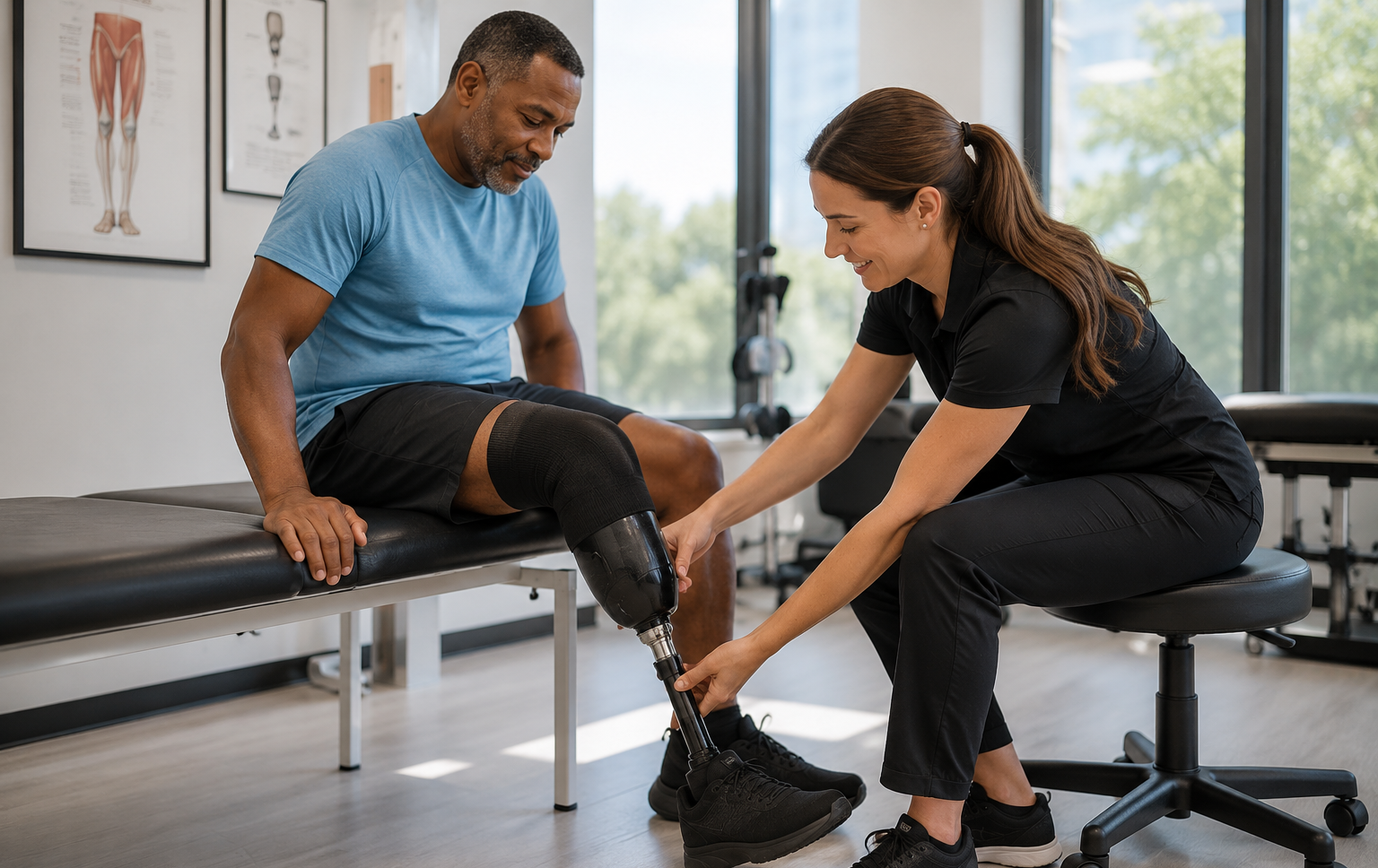
Receiving a prosthesis is a huge milestone, but many people are left wondering what is actually normal afterward. Is soreness expected? What about redness, pain, or callusing? If you have ever caught yourself wondering, “Is this supposed to feel like this?” you are definitely not alone.
The truth is, adjusting to a prosthesis takes time. Your body is adapting to something completely new, and some discomfort during the transition period can be expected. But there is a difference between normal adjustment and something that may signal a prosthetic fit issue or skin problem.
Many people assume they simply need to “push through” discomfort or “toughen up” during the adjustment process. We are here to tell you: you do not have to suffer through it.
In this guide, we are breaking down what is normal after receiving a prosthesis, what is not, and when it may be time to reach out to your prosthetist.
Residual Limb & Skin Care: What’s Normalnd What’s Not
Your residual limb goes through a lot after receiving a prosthesis. Between pressure, friction, sweat, and volume changes, it is completely normal to notice differences as your body adjusts. The key is knowing what is part of a normal adjustment period and what could signal a prosthetic fit issue or skin problem that deserves attention.
The normal part of your adjustment period may include:
✔ Mild redness after removing your prosthesis that fades within
15–20 minutes
✔ Sweating, especially early on as your body adjusts
✔ Mild muscle soreness as your body gets acclimated to new movement patterns and fit
✔ Volume changes in your residual limb throughout the day
What’s NOT normal:
✘ Blisters, open areas, or skin breakdown
✘ Bruising or dark pressure spots
✘ Redness that sticks around for hours
✘ Burning, pinching, or sharp pain
✘
Callusing at the end of your residual limb — this is often a sign of excess pressure or poor fit and is not something you should simply “toughen up” through.
If redness lasts, pain increases, or skin changes develop, it is worth checking your fit sooner rather than later.
You do not need to “get used to it” or “toughen up.” You know your body. A prosthesis should support your day-to-day life, not make it harder to live. If something feels off, it is always worth speaking up and checking in with your prosthetist.
Prosthetic Fit: What Should It Feel Like?
One of the most common questions after receiving a prosthesis is: “Is it supposed to feel like this?”
The truth is, a prosthetic fit can feel different at first because your body is adjusting to something completely new. Building confidence, relearning movement, and making small adjustments along the way are all part of the process. However, there is a difference between an adjustment period and a prosthetic fit issue.
What’s normal:
✔ Feeling different at first — it is a big change, physically and mentally
✔ Relearning balance and gradually rebuilding confidence while walking or moving
✔ Needing sock adjustments as swelling and limb volume changes throughout the day
✔ Minor moments of awkwardness while getting used to your prosthesis and movement patterns
What’s NOT normal:
✘ Feeling like you are constantly “sliding” or “pistoning” in your socket
✘ Feeling unsafe, unstable, or worried about falling
✘ Pain every time you walk or bear weight
✘ Avoiding wearing your prosthesis simply because it hurts
If you dread putting your prosthesis on every morning, that is worth a conversation. You should not have to push through constant discomfort just to make your prosthesis work. Sometimes a small adjustment can make a big difference.
Phantom Sensations vs. Phantom Pain
If you feel like your limb is still there after amputation, you are not imagining things and you are definitely not “crazy.” Phantom sensations are incredibly common and can happen even years after limb loss.
Many amputees experience phantom sensations and are surprised by how real they can feel. Knowing the difference between what is expected and what may need attention can help you feel more confident in your recovery.
What’s normal:
✔ Feeling like your limb is still there
✔ Tingling, itching, pressure, or movement sensations
✔ Feeling like your toes, foot, hand, or fingers are still present
What’s NOT normal:
✘ Severe pain that worsens over time
✘ Pain that prevents sleep or makes wearing your prosthesis difficult
✘ New or suddenly worsening symptoms that feel different than before
While phantom sensations are common, severe or worsening pain should not be ignored. If something changes or feels concerning, it is always worth checking in with your care team.
Taking Care of Your Prosthesis
Taking care of your prosthesis is about more than keeping it clean. Daily care can help improve comfort, reduce skin irritation, and help your prosthesis last longer. Small habits now can prevent bigger problems later.
Normal care habits:
✔ Cleaning liners daily to reduce sweat, odor, and bacteria buildup
✔ Checking your residual limb and skin every night for redness, irritation, or pressure spots
✔ Keeping prosthetic components dry and clean
✔ Attending follow-up appointments, even if things seem to be going well
What’s NOT normal:
✘ Ignoring clicking noises, loose parts, or broken components
✘ Waiting months to say something because you do not want to “bother” your prosthetist
✘ Assuming discomfort will automatically go away on its own
We would always rather adjust a small issue early than fix a bigger problem later. Sometimes the smallest adjustment can make the biggest difference in comfort.
When Should You Call Your Prosthetist?
Sometimes it can be hard to tell whether something is worth bringing up. A good rule of thumb? If something feels different, painful, or concerning, it is always okay to ask questions.
Reach out to your prosthetist if:
✔ You notice callusing on your residual limb
✔ Skin breakdown, blisters, or open areas develop
✔ You find yourself limping more than usual
✔ Your prosthetic fit suddenly changes
✔ You are experiencing pain you are trying to “push through”
Being uncomfortable does not make you tough. Speaking up helps your prosthesis work the way it is supposed to and helps you stay comfortable, confident, and moving.
Adjusting to a prosthesis takes time, and you do not have to figure it out alone. If something feels off, or you simply have questions, reach out to your prosthetist. Sometimes the smallest adjustment can make the biggest difference.
Whether you are looking for a second opinion, have concerns about your current prosthesis, or want to begin care with a team that treats you like family, you do not have to navigate this alone. At Palmetto Orthotics & Prosthetics, we are here to support you every step of the way. Schedule your consultation today — we would be honored to be part of your journey.