Disability Pride Month: What It Means to Us
Celebrating our amputee and orthotic patients, and the everyday moments that don’t make it into the highlight reel
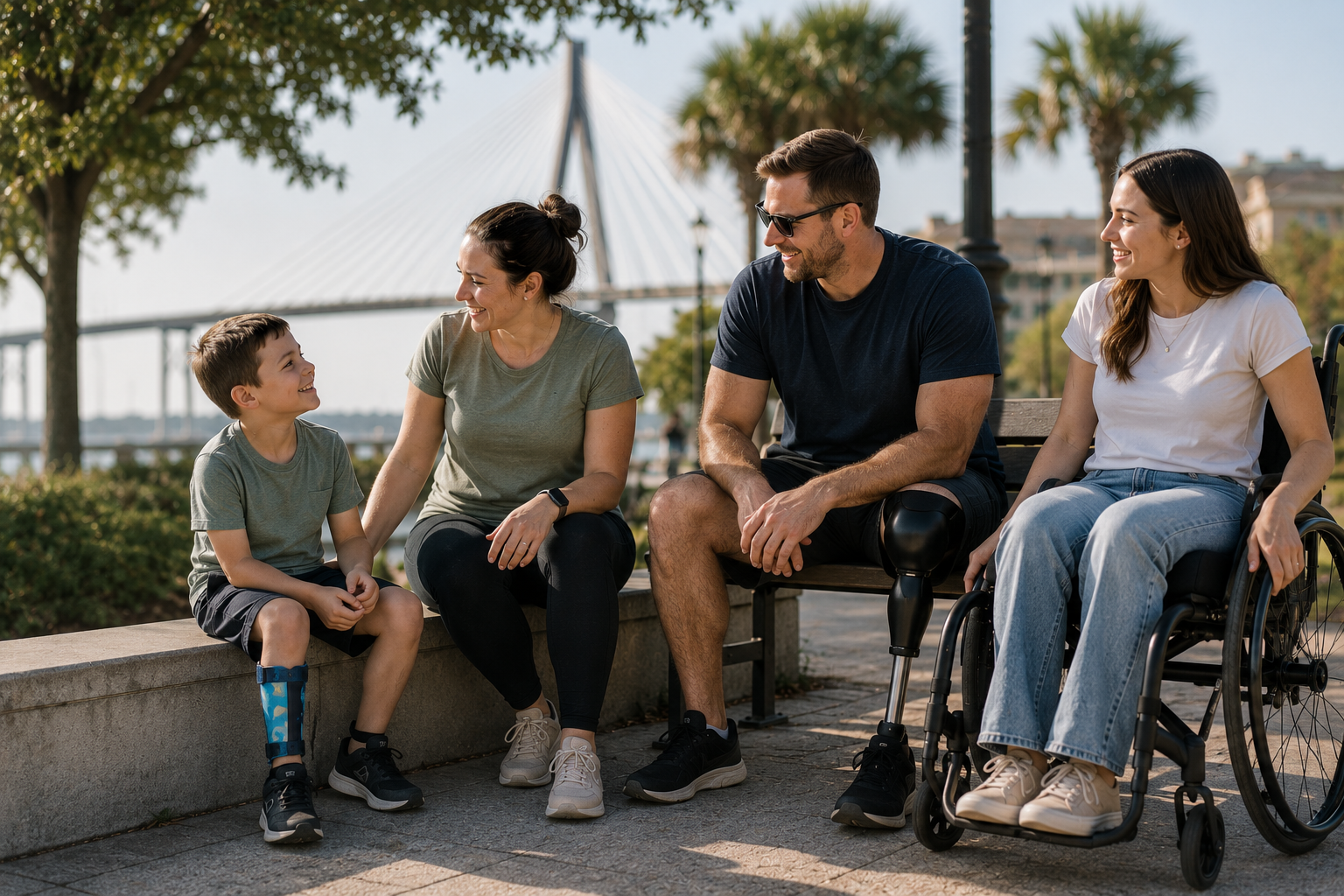
July is Disability Pride Month, and if you ask us, it’s overdue for more attention. Too often, disability — including limb loss and mobility differences — gets treated as something to overcome quietly, in private, before rejoining “normal” life. That’s not what we see at Palmetto Orthotics & Prosthetics, and it’s not how our amputee and orthotic patients actually live.
Here’s what pride looks like from where we sit as a prosthetics and orthotics practice, and what we’re doing about it beyond a social media post.
A Quick Bit of Background
Disability Pride Month started in Boston in 1990, the same year the Americans with Disabilities Act was signed into law. The idea was simple: disability isn’t something to hide or minimize — it’s part of who someone is, and it deserves the same visibility as any other part of identity. It’s since grown into a global observance, marked every July.
We’re not disability advocacy specialists — we’re an orthotics and prosthetics practice. But our amputee patients and orthotic wearers live this every day, and that earns us a responsibility to pay attention and speak up, not just fit devices and send people on their way.
What We See Every Day
Every prosthetic or orthotic device we fit belongs to someone with a full life on the other side of that appointment — a job, a family, a sport, a routine. Some of what we get to witness:
• A patient walking into a follow-up after a prosthetic fitting not because something’s wrong, but to show off how far they’ve come
• A kid running at recess for the first time with a new prosthetic leg or orthotic brace, without a second thought
• An amputee finally back to gardening, fishing, or coaching Little League without pain or hesitation
None of that is a “before and after” story. It’s just life, and our patients aren’t waiting for anyone’s permission to live it fully.
What Disability Pride Actually Asks of Us
Pride Month isn’t just a celebration — it’s a check-in. Here’s where we’re putting our attention this year:
• Listening first. We ask our patients what they want us to understand about their day-to-day, not just their diagnosis or their fit.
• Real accessibility, not just compliance. That means accessible healthcare in our office, our forms, and how we communicate — not just the minimum a building code requires.
• Showing up consistently. Not just during appointments, and not just in July — from how we talk about mobility to how we show up for the people who trust us with it.
If You Want to Show Up This Month (and Beyond)
You don’t have to be a patient, a caregiver, or work in healthcare to take part. A few honest ways to engage:
✔ Follow and amplify disabled voices in your own community, not just national advocates
✔ Ask before assuming. Whether someone needs help or wants to talk about their disability — asking beats guessing
✔ Use language people actually prefer. It varies person to person, so ask rather than default to what feels “polite”
✔ Support accessible spaces and events, and speak up when something isn’t accessible
What’s not particularly helpful:
✘ Treating disabled people as inspirational by default, just for living their lives
✘ Speaking for someone instead of listening to them
✘ Assuming one person’s experience of disability represents everyone’s
None of this is complicated. It just takes paying attention.
Frequently Asked Questions
What is Disability Pride Month?
Disability Pride Month is observed every July to celebrate disability as a natural and valued part of human identity, rather than something to hide or overcome. It began in Boston in 1990, the same year the Americans with Disabilities Act was signed into law.
How can I support amputees and people with limb loss?
Listen without assuming, ask before offering help, use the language someone actually prefers for their own experience, and support accessible spaces and events in your community.
Does Palmetto Orthotics & Prosthetics work with amputees?
Yes — we provide prosthetic and orthotic care for patients living with limb loss and mobility differences, supporting them through fittings, adjustments, and long-term follow-up care.
An Open Invitation
If you’re one of our patients, we’d love to hear from you this month — what pride looks like in your life, or where you think we can do better. If you’re new to Palmetto O&P, consider this your open door.
Disability isn’t something anyone here needs to apologize for, minimize, or push through in silence. This month — and every month — we’re proud to be in this with the people who remind us why we do this work.
Want to share your story or connect with our team? Reach out to us here — we'd be honored to feature it.
Palmetto Orthotics & Prosthetics — built around the life you're getting back to.